


Dental Extraction Instruments: Types, Uses & How to Choose the Right Tools

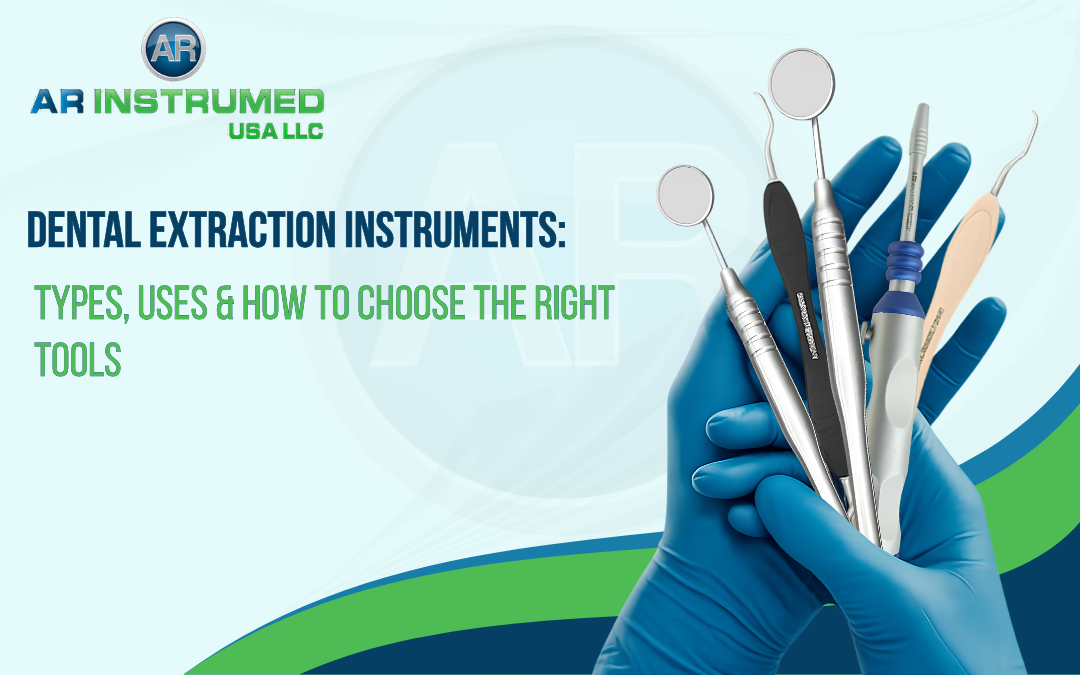
Dental extraction instruments are the forceps, elevators, luxators, periotomes and supporting surgical tools used to loosen, lift and remove teeth or root fragments. Most extractions combine several categories. Elevating or luxating instruments loosen the tooth, forceps deliver it, and bone or root-tip instruments handle more demanding cases. Matching the instrument pattern to the tooth and the procedure gives the clinician better access and control. It also keeps buyers from paying for tools they will rarely use.
What Are Dental Extraction Instruments?
Dental extraction instruments are hand instruments designed for the stages of tooth removal. These stages are separating soft tissue attachments, loosening the tooth in its socket, grasping it, and managing bone or retained roots. Dentists and oral surgeons rely on these tools for both simple and surgical extractions. Because designs vary by tooth group, side and access, building a reliable set means choosing patterns, not just categories.
Types of Dental Extraction Instruments and Their Uses
Dental Extraction Forceps
Dental extraction forceps grasp the crown or root and deliver the tooth once it is sufficiently loosened. Beaks are shaped for specific tooth groups, such as upper incisors and canines, premolars or molars. Upper molar patterns are often side-specific, as in Fig. 17 (right) and Fig. 18 (left). Paediatric patterns are also available, such as children’s forceps.
Root Elevators and Dental Elevators
Dental root elevators use controlled leverage between the tooth and the surrounding bone. They loosen the tooth, expand the socket space and help lift roots. Forceps grip a tooth, while elevators create the movement that makes removal possible.
Luxators and Periotomes
Luxating instruments and periotomes have thin, sharp blades. They sever the periodontal ligament fibers along the root. Clinicians often choose them when they want a more conservative approach to the socket.
Micro Elevators and Root-Tip Instruments
Micro elevators have fine tips for fractured roots and root tips where standard elevators are too bulky.
Bone Rongeurs and Supporting Surgical Instruments
Bone rongeurs trim and contour bone and remove sharp edges after extraction. They are used in surgical cases rather than every extraction.
Dental Extraction Sets
Extraction sets group commonly used instruments for convenient purchasing and organization. Check each set’s contents against your caseload before ordering.
How to Choose the Right Dental Extraction Instruments
- Clinical application and pattern: Match the instrument to the tooth group, side and procedure type.
- Tip or beak design: Check that the working end suits the access you need, especially in posterior regions.
- Material and finish: Review the stated material, construction and surface finish. Our stainless steel vs. titanium comparison can help.
- Handle and grip: Choose handle styles your team finds comfortable and controllable. Note that some instruments come in silicone-handled versions.
- Cleaning and sterilization: Confirm compatibility with your reprocessing workflow and follow the manufacturer’s instructions for use.
- Specifications and availability: Compare product details, quantities and ordering requirements before you buy.
Buying Dental Extraction Instruments for Clinics and Individual Dentists
Start with the instruments you use most. Add specialty items such as micro elevators or rongeurs as your case mix requires. Replace instruments that show wear, damage or reduced performance, and size your order to your sterilization cycle so you always have a ready set.
Explore our dental extraction instruments to compare patterns and specifications, or browse the full online shop.
Explore Dental Extraction Instruments → Browse Full Online Shop →Dental Extraction Instruments for Dealers, Distributors and Bulk Buyers
hen comparing suppliers, look at:
- Product range: Does the catalog cover forceps, elevators, luxators and sets?
- Specification clarity: Are product details and patterns clearly documented?
- Quantities: Can the supplier discuss your volume requirements?
- Communication: Is the supplier responsive and clear about ordering terms?
- Supplier information: Review the manufacturing capabilities and certifications pages and confirm anything relevant to your market.
Dealers, distributors, importers, hospitals and dental schools can submit a dealer inquiry to discuss their purchasing requirements.
Submit a Dealer Inquiry →Frequently Asked Questions
What are the main types of dental extraction instruments?
The main types are extraction forceps, root and dental elevators, luxators and periotomes, micro elevators, bone rongeurs and extraction sets.
What is the difference between extraction forceps and root elevators?
Elevators loosen the tooth by applying leverage within the socket. Forceps grasp the loosened tooth to remove it.
How do dentists choose the appropriate extraction instruments?
They match instrument patterns to the tooth, side, access and procedure. They also consider handle design, finish and sterilization compatibility.
Where can dental professionals buy extraction instruments?
Professionals can buy from specialist dental instrument suppliers. AR INSTRUMED offers an extraction instruments category through its online shop.
Can clinics and distributors inquire about bulk purchases?
Yes. Use the dealer inquiry page or contact AR INSTRUMED to discuss quantities and requirements.
The right dental extraction instruments depend on pattern, access, construction quality and sterilization compatibility. Individual dentists and clinics can browse root elevators and the wider extraction range.
Dealers, distributors and bulk buyers can discuss bulk purchasing requirements with AR INSTRUMED.