

Stainless Steel vs Titanium Dental Instruments: Which Material Is Best? (2026 Guide)

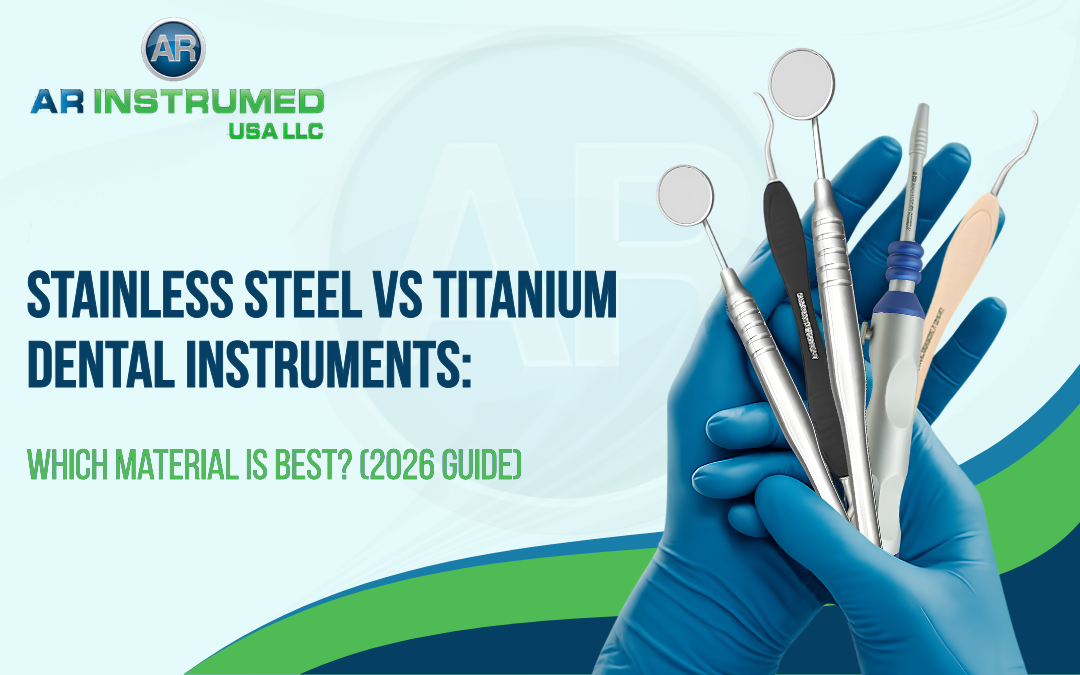
Stainless Steel vs Titanium Dental Instruments: Which Material Is Best for Dentists?
Choosing between stainless steel vs titanium dental instruments is one of the most practical decisions a dental practice in the United States can make. Both materials are trusted across dentistry, but they perform very differently in daily clinical use. This guide breaks down the real differences in strength, weight, corrosion resistance, and cost so US dentists, hygienists, and clinic owners can choose dental instruments that match how they actually work.
Whether you are stocking a new operatory or replacing worn tools, understanding titanium vs stainless steel dental instruments helps you invest in equipment that lasts longer, feels better in hand, and keeps patients safe.
Dental hand instruments are used dozens of times a day and sterilized after every use. Over time, a poor-quality material can corrode, dull, or become uncomfortable to hold. The right dental instrument materials reduce hand fatigue and ergonomic strain for the clinician, protect edge sharpness for precision work, and hold up to repeated autoclave sterilization cycles without breaking down. Material choice directly affects instrument durability, patient safety, and long-term cost per procedure.
What Are Stainless Steel Dental Instruments?
Stainless steel dental instruments are the industry standard and remain the most widely used option in US dental clinics. They are manufactured from a hardened surgical steel alloy (such as 440A series) that offers excellent strength, making them ideal for extractions, scaling, and other procedures that require firm pressure.
Benefits of Stainless Steel Dental Instruments
- Excellent hardness and edge retention for cutting and scaling instruments
- Lower cost, making full-set replacement more affordable
- Reliable performance for heavy-duty and general dental tools
- Familiar weight and balance that most clinicians are trained on
Limitations of Stainless Steel Dental Instruments
- Heavier than titanium (roughly 45% more weight), which can add strain during long procedures
- Lower-grade steel may show staining or pitting if sterilization protocols are inconsistent
What Are Titanium Dental Instruments?
Titanium dental instruments are built from a lightweight, non-magnetic alloy (typically Grade 5 Titanium) known for outstanding corrosion resistance and biocompatibility. They are increasingly popular for implant dentistry, periodontal instruments, and any procedure where comfort over long working hours matters.
Benefits of Titanium Dental Instruments
- Significantly lighter (reducing weight by about 45%), reducing hand and wrist fatigue
- Outstanding corrosion resistance, even after frequent autoclave sterilization due to a natural protective oxide layer
- High biocompatibility, favored for implant instruments and periodontal instruments because it will not scratch or damage titanium implant surfaces during scaling
- Non-magnetic, which suits sensitive implant dentistry work
Limitations of Titanium Dental Instruments
- Higher upfront cost compared to stainless steel dental tools
- Softer than stainless steel, so it is not always ideal for heavy force tasks
Stainless Steel vs Titanium Dental Instruments: Quick Comparison
| Feature | Stainless Steel | Titanium |
|---|---|---|
| Weight | Heavier | Lightweight (45% Lighter) |
| Corrosion Resistance | Good (with proper care) | Excellent (Rust-proof oxide layer) |
| Implant Safety | Can scratch titanium surfaces | 100% Safe for implant maintenance |
| Hardness / Edge Retention | Very High | Moderate |
| Cost | Lower | Higher |
| Best For | Heavy-duty, forceful procedures | Long procedures, comfort-focused work |
| Sterilization / Autoclave | Compatible | Excellent compatibility |
| Biocompatibility | Good | Excellent |
Which Material Is Best for Implant, Periodontal, and Surgical Instruments?
For implant dentistry, many clinicians prefer titanium dental instruments because of their biocompatibility and corrosion resistance around implant surfaces. Periodontal instruments and scalers used for extended, precision-focused sessions also benefit from titanium’s lighter weight. On the other hand, stainless steel dental instruments remain the preferred choice for surgical instruments and extractions that demand maximum hardness and force. Most US dental clinics use a combination of both materials, matching each instrument to its clinical purpose.
How to Choose the Right Dental Instrument Material for Your Practice
Start by looking at your case mix. Practices doing frequent implant and periodontal work benefit from adding titanium dental tools to reduce hygienist and clinician fatigue. Clinics focused on general and surgical dentistry may find stainless steel dental instruments more cost-effective for daily volume. Budget, sterilization protocols, and staff comfort should all factor into your final dental instrument buying guide decision.
Where to Buy Reliable Dental Instruments in the USA
If you are searching for a trusted dental instruments supplier USA clinics rely on, AR Instruments offers a wide range of premium stainless steel and titanium dental instruments, including surgical, periodontal, and implant instruments manufactured to CE-certified standards. Their catalog makes it easy to compare stainless steel dental instruments and titanium dental tools side by side and order professional-grade sets built for daily US clinical use.
Final Thoughts: Stainless Steel or Titanium for Your Clinic?
There is no single winner in the stainless steel vs titanium dental instruments debate the best material for dental instruments depends on the procedure. Stainless steel delivers strength, durability, and affordability for demanding daily use. Titanium delivers comfort, corrosion resistance, and precision for implant and periodontal work. Most well-equipped US dental practices stock both, choosing the right tool and material for every procedure to protect patient outcomes and staff comfort alike.
Frequently Asked Questions
Are titanium dental instruments better than stainless steel?
Titanium is lighter and more corrosion-resistant, making it better for comfort and implant work, while stainless steel is stronger and better suited for heavy-duty procedures.
Do titanium dental instruments rust?
No. Titanium naturally resists corrosion and rust, even after repeated autoclave sterilization cycles, which is why it is popular for long-term clinical use.
Why are titanium dental instruments more expensive?
Titanium is harder to manufacture and machine than stainless steel, and its lightweight, corrosion-resistant properties add to production cost, which raises the final price.
Can titanium dental instruments be autoclaved?
Yes. Titanium dental instruments handle autoclave sterilization very well and typically show less wear over time compared to lower-grade stainless steel tools.
What is the best material for dental instruments overall?
There is no universal answer stainless steel is best for strength and affordability, while titanium is best for lightweight comfort and corrosion resistance in detailed procedures.