


Dental Surgical Instruments: Types, Uses & How to Choose the Right Instruments

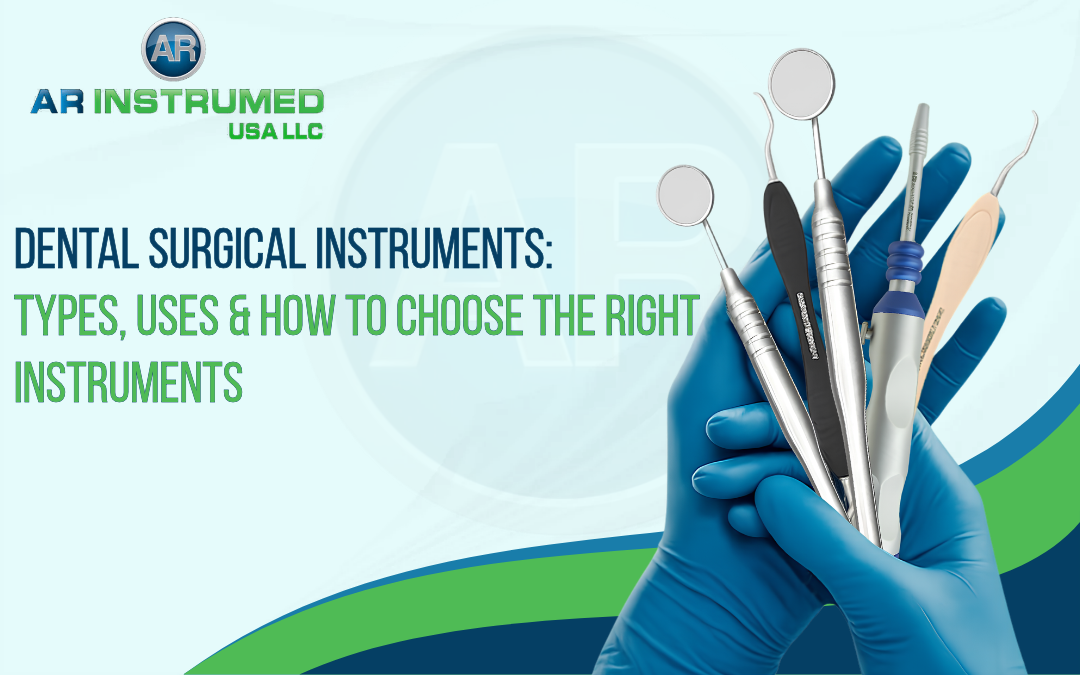
Every surgical procedure in a dental practice depends on the tools in the tray. Dental surgical instruments are the hand instruments used to cut, elevate, grasp, retract, suture and shape tissue and bone during extractions, implant placement, flap procedures and other oral surgery. The right set keeps a procedure organized and predictable. The wrong set slows the team down and adds avoidable frustration.
This guide covers the main types of dental surgical instruments and what they do, how to evaluate quality, and what to look for in a manufacturer or wholesale supplier. Whether you are equipping a new clinic or sourcing for resale, it should help you buy with more confidence.
What Are Dental Surgical Instruments?
Dental surgical instruments are precision hand tools designed for procedures that involve soft tissue or bone in and around the mouth. Unlike basic examination instruments such as mirrors and explorers, surgical instruments are built to apply controlled force, manage tissue and maintain access to the surgical site.
They are used in general dental practices, specialist oral and maxillofacial surgery offices, and hospital dental departments. The term dental surgery instruments is often used interchangeably with oral surgery instruments, although the second usually points to the more complex procedures performed by oral surgeons
Choosing the right dental surgical instruments is essential for maintaining an efficient clinical workflow and supporting different dental procedures. From extraction forceps and root elevators to bone rongeurs and surgical scissors, every instrument has a specific function.
Whether you are equipping a dental clinic, managing an oral surgery practice or sourcing products for wholesale distribution, understanding instrument types, applications and quality specifications can help you make better purchasing decisions.
Different Types of Dental Surgical Instruments
Most dental surgical instruments fall into a handful of functional groups. Knowing these categories makes it easier to build a dental surgical instrument list for your practice.
Extraction Instruments
These loosen and remove teeth and roots. The group includes extraction forceps, elevators and periotomes. You can browse AR Instrumed's dental extraction instruments to see how these are organized.
Soft Tissue Instruments
Tissue forceps, surgical scissors, scalpel handles and periosteal elevators are used to incise, lift, hold and trim gingival and mucosal tissue.
Bone Management Instruments
Bone rongeurs, bone files and chisels are used to contour or smooth bone after an extraction or during preparation for other procedures.
Access, Retraction and Suturing Instruments
Retractors keep the site visible, while needle holders and suture scissors support wound closure.
Implant Surgical Instruments
Implant procedures use specialized instruments for site preparation and placement. The specific set depends on the implant system and the clinician's protocol.
You can see the broader range in AR Instrumed's dental surgery instruments category.
Essential Dental Surgical Instruments and Their Uses
Not every instrument is needed for every procedure. The selection depends on the case, the clinician's technique and the practice's scope of services. The following are commonly used in dental and oral surgery.
Dental Extraction Forceps
Extraction forceps grip the crown or root of a tooth so the clinician can deliver it from the socket. They are shaped differently for upper and lower teeth, and for anterior, premolar and molar positions. Browse extraction forceps to compare patterns.
Dental Elevators and Root Elevators
Elevators are used to loosen a tooth or root fragment before or instead of forceps. Straight, angled and curved working ends suit different access situations. See the available root elevators for typical configurations.
Periotomes
Periotomes have thin, narrow blades that help sever the periodontal ligament fibers around a tooth. Clinicians often choose them when they want a more conservative approach to extraction. Explore periotomes for details.
Periosteal Elevators
These lift the periosteum and soft tissue from the underlying bone, helping create access for flap procedures and extractions.
Bone Rongeurs
Rongeurs remove and trim small amounts of bone. Clinicians often use them to smooth sharp edges after extractions.
Bone Files
Bone files refine and smooth bony margins once larger contouring is done.
Dental Surgical Scissors
Surgical scissors trim tissue and cut sutures. Tip shape and blade length vary, so match them to the task.
Tissue Forceps
Tissue forceps, with or without teeth, stabilize soft tissue while the clinician incises or sutures. Fine tips are generally preferred for delicate tissue handling.
Needle Holders
Needle holders grip the suturing needle securely during wound closure. Handle length, jaw size and locking mechanism all affect comfort and control.
Dental Retractors
Retractors move cheeks, lips, tongue or flaps out of the way so the surgical field stays visible.
Implant Surgical Instruments
These support implant site preparation and placement. Because requirements differ between systems, buyers should confirm compatibility before ordering.
Quick Reference Table
| Instrument | Main Function | What to Check When Buying |
|---|---|---|
| Extraction forceps | Grip and remove teeth or roots | Pattern for the tooth type, beak fit, handle comfort |
| Elevators | Loosen teeth and root fragments | Working-end shape, handle grip, tip finish |
| Periotomes | Sever periodontal ligament | Blade thickness, rigidity, tip condition |
| Periosteal elevators | Lift soft tissue from bone | Edge design, size, balance |
| Bone rongeurs | Trim and remove bone | Jaw alignment, spring action, size |
| Surgical scissors | Cut tissue and sutures | Blade alignment, tip shape, smooth action |
| Tissue forceps | Hold and stabilize tissue | Tip design, grip texture, spring tension |
| Needle holders | Hold suturing needles | Jaw fit, lock function, handle length |
| Retractors | Maintain surgical access | Blade size, shape, ease of cleaning |
How to Choose the Right Dental Surgical Instruments
If you are wondering how to choose dental surgical instruments, start with the procedures you perform most often and work backward from there.
Match Instruments to Intended Clinical Applications
A practice focused on routine extractions needs different tray contents than an oral surgery office performing implant and bone procedures. List your typical procedures first, then build your instrument selection around them.
Evaluate Design and Handling
Instruments should feel balanced and secure in the hand. Check handle shape, weight and grip texture. Poor ergonomics can contribute to fatigue during longer procedures.
Look at Stainless Steel Quality
Most surgical instruments are made from stainless steel, but grades and treatment differ. Ask the manufacturer to specify the material used for each product line rather than assuming. Material choice influences corrosion resistance and edge or tip retention.
Inspect Finishing and Construction
Good finishing shows in the details: smooth surfaces, clean joints, aligned jaws, consistent edges and no rough spots or burrs. Hinged instruments should open and close smoothly.
Consider Size and Working-End Design
Working ends come in many sizes and angulations. A beak that fits one tooth well may not suit another, so check the pattern and dimensions against your clinical needs.
Confirm Maintenance and Sterilization Compatibility
Instruments are reprocessed many times. Confirm that the product is intended for the cleaning and sterilization methods your practice uses, and ask for the manufacturer's care and handling guidance. Clinics should always follow their own infection control protocols and applicable guidelines.
What to Look for in a Dental Surgical Instruments Manufacturer
Choosing a dental instrument manufacturer is as important as choosing the instruments. Here is what to evaluate.
- Product range: A broader catalog lets you consolidate orders and keep patterns consistent across your tray setups.
- Manufacturing experience: Ask how long they have made dental instruments and what product categories they focus on.
- Material specifications: Request clear information on the materials used. Be cautious if specifications are vague.
- Quality control processes: Ask how instruments are inspected before shipment.
- Product documentation: Request catalogs, specification details and any documentation relevant to your market and your own compliance requirements.
- Communication and order support: Responsive, clear communication before and after the order is a good indicator of how the relationship will go.
- Wholesale and bulk options: Ask about minimum quantities, pricing structure and lead times.
If a supplier cannot answer these questions plainly, keep looking.
Buying Dental Surgical Instruments Wholesale
Wholesale dental surgical instruments make sense for dealers, distributors, multi-location clinics, hospital groups and international buyers who need consistent supply at scale.
Before placing a bulk order, consider the following:
- Start with a defined product list. Know the patterns, quantities and specifications you want.
- Ask about samples. Reviewing instruments in person helps you judge finish and handling before committing to volume.
- Clarify terms. Confirm minimum order quantities, payment terms, packaging and lead times in writing.
- Plan for shipping and import requirements. Buyers in the United States should confirm applicable import and regulatory requirements for their product category.
- Think long term. A supplier who can support repeat orders and a growing product range is more valuable than one who only offers the lowest price once.
Dealers and distributors can use the dealer inquiry page to start a conversation about wholesale supply.
Why Consider AR Instrumed?
AR Instrumed is a dental instrument manufacturer based in Sialkot, Pakistan, serving international customers. Sialkot has long been known as a center for surgical and dental instrument production, and AR Instrumed focuses on supplying dental professionals and trade buyers.
The product range includes dental surgery and extraction instruments such as extraction forceps, root elevators and periotomes, along with other dental instrument categories. Clinics, oral surgeons, dealers and importers can request product information, discuss specifications and ask about wholesale and bulk requirements.
- Dental clinics and oral surgeons: Ask about instruments suited to your procedures and tray setups.
- Dealers and distributors: Discuss wholesale supply and partnership options through the dealer inquiry page.
- International buyers planning bulk orders: Share your product list and quantities through the contact page for details.
Looking for a Dental Surgical Instruments Manufacturer?
Explore AR Instrumed's dental surgical and extraction instrument range. Contact the team to discuss product specifications, wholesale supply and bulk order requirements.
Explore Dental Surgery Instruments Submit Dealer InquiryFinal Thoughts
Choosing dental surgical instruments is a practical decision that affects daily workflow. Start with the procedures you perform, then evaluate design, material, finishing and sterilization compatibility. When buying in volume, look closely at the manufacturer behind the product: their range, documentation, quality checks and communication.
Take the time to compare options and request specifications and samples where possible. Quality, suitability and supplier reliability matter more than the lowest price on a single order.
To discuss your requirements, contact AR Instrumed for product details, specifications and wholesale information.
Frequently Asked Questions
1. What are the most common dental surgical instruments?
Common examples include extraction forceps, elevators, periosteal elevators, surgical scissors, tissue forceps, needle holders, retractors, bone rongeurs and bone files. The exact set depends on the procedure.
2. What instruments are used in oral surgery?
Oral surgery typically uses extraction instruments, soft tissue instruments, bone management tools, retractors and suturing instruments. Implant procedures add specialized implant surgical instruments.
3. What is the difference between dental and oral surgery instruments?
There is a lot of overlap. "Dental surgery instruments" is a general term for surgical tools used in dental practice, while "oral surgery instruments" usually refers to those used in more complex procedures by oral and maxillofacial surgeons.
4. How should dental surgical instruments be cleaned and sterilized?
Follow the manufacturer's instructions and your clinic's infection control protocol. This generally involves pre-cleaning, thorough cleaning, inspection, packaging and sterilization using validated methods, in line with recognized guidelines such as those from the CDC.
5. How can dentists choose high-quality surgical instruments?
Check material specifications, finishing, jaw alignment, handling and balance. Ask the supplier for documentation and, where possible, evaluate samples before placing larger orders.
6. Where can dental clinics buy dental surgical instruments?
Clinics can buy from dental supply dealers, distributors or directly from manufacturers. Buying direct can offer more control over specifications and ordering options, particularly for larger quantities.
7. Can dental surgical instruments be purchased wholesale?
Yes. Many manufacturers offer wholesale and bulk purchasing for dealers, distributors, clinics and hospitals. Contact the supplier to confirm minimum quantities, pricing and lead times.