

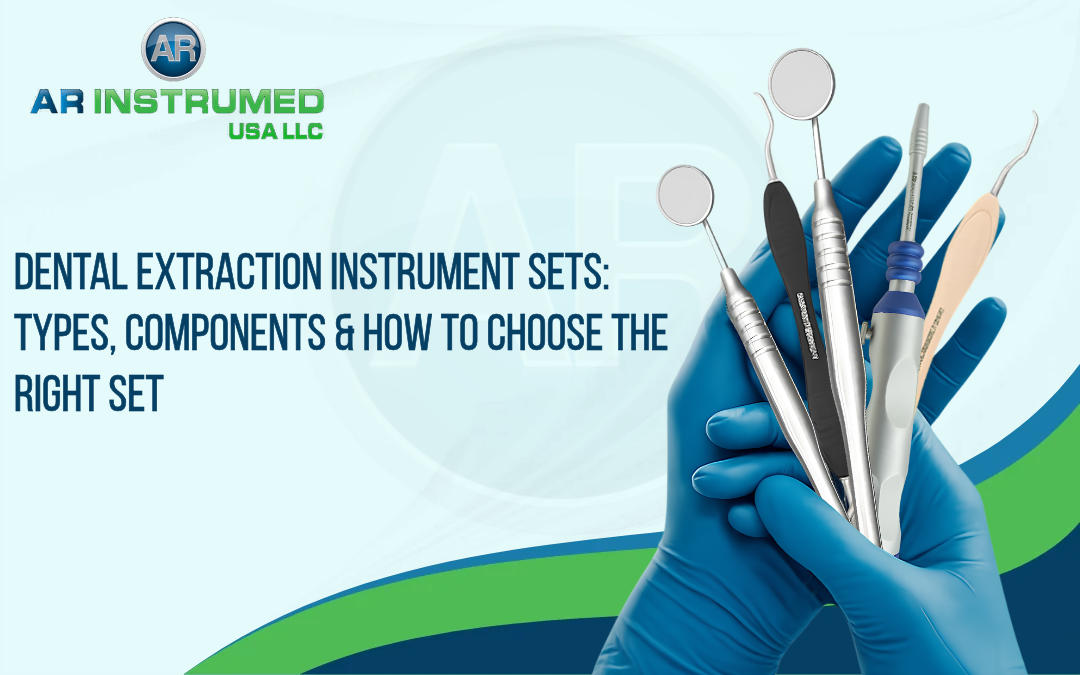
Dental Extraction Instrument Sets: Types, Components & How to Choose the Right Set

What Are Dental Extraction Instrument Sets?
Dental extraction instrument sets are organized groups of instruments used to remove teeth and tooth roots safely and with control. A typical set combines extraction forceps, elevators, and supporting surgical tools so the clinician has what they need within reach once the procedure starts.
You will also see them sold as dental extraction kits, dental extraction sets, or dental extraction instruments sets. The names vary by supplier, but the idea is the same: a ready-to-sterilize, ready-to-use selection for extraction procedures.
This guide covers what goes into a set, how the main instruments differ, and what to check before you buy. It is written for dentists, clinic managers, oral surgeons, hospital procurement teams, dealers, and importers.
Why Dental Extraction Instrument Sets Matter for Dental Clinics
Extractions are routine in general practice and daily work in oral surgery. When the right instrument is not on the tray, the procedure slows down, and a second instrument has to be opened mid-case.
A well-built set helps with:
- Chairside efficiency. Instruments are grouped by procedure, so setup and turnover are faster.
- Sterilization workflow. One cassette or pouch is easier to track through reprocessing than a dozen loose instruments.
- Consistency across operatories. Standardized sets mean every room is equipped the same way.
- Inventory control. Clinics with multiple locations can order, count, and replace by set rather than by single item.
For group practices and hospitals, this standardization often matters as much as the instruments themselves.
Different Types of Dental Extraction Instrument Sets
There is no single universal set. What you need depends on case mix, clinician preference, and whether the practice handles surgical extractions in-house.
| Instrument | Main Purpose | Key Difference |
|---|---|---|
| Extraction Forceps | Grip and remove the tooth or root | Used for final removal |
| Straight Elevator | Loosen the tooth and work into the ligament space | General-purpose luxation |
| Coupland Elevator | Initial luxation, often with a chisel-shaped blade | Commonly used to start the extraction |
| Cryer Elevator | Remove roots, often used in pairs (left and right) | Triangular blade designed for root removal |
| Warwick James Elevator | Fine work on roots and root fragments | Delicate tips for small fragments |
| Periotome / Luxator | Sever the periodontal ligament | Thin blade designed for minimal bone disturbance |
| Periosteal Elevator | Reflect soft tissue | Works on gingiva and periosteum, not the tooth |
| Rongeur / Bone File | Trim or smooth bone | Used in surgical extraction cases |
These categories overlap, and manufacturers define them differently. Always ask for the exact instrument list rather than relying on the set name.
Essential Components of a Dental Extraction Instrument Set
Most extraction sets are built from four groups of instruments.
Extraction Forceps
Forceps grip the tooth crown or root and deliver the final removal after the tooth has been loosened. They are shaped for specific tooth groups and arches.
Elevators
Elevators loosen the tooth, extend the periodontal ligament space, and help luxate roots. They are also used to retrieve fractured root fragments.
Periotomes and Luxators
These thin-bladed instruments cut or sever the periodontal ligament, which is useful when the clinician wants to preserve surrounding bone.
Supporting Surgical Instruments
Depending on the set, these may include periosteal elevators, tissue forceps, surgical curettes, bone files, rongeurs, needle holders, and surgical scissors.
Dental Extraction Forceps: Types and Uses
Extraction forceps are designed around anatomy. The beak shape, handle angle, and size are matched to the tooth group, which is why one pair rarely covers every case.
Upper (Maxillary) Forceps
Upper forceps usually have handles in line with the beaks or a gentle bayonet design. Common groups include:
- Upper universal forceps for anterior teeth and premolars
- Upper molar forceps, typically offered in left and right versions
- Upper root forceps for retained roots
Lower (Mandibular) Forceps
Lower forceps generally have beaks set at an angle to the handles so the clinician can reach the arch. Common groups include:
- Lower universal forceps
- Lower molar forceps, including cowhorn patterns with pointed beaks
- Lower root forceps
Pediatric Forceps
Smaller beaks and handles are made for primary teeth.
Pattern names and numbering systems vary between manufacturers and regions, so confirm the exact pattern when ordering. You can browse the range of extraction forceps from AR Instrumed to see how different patterns are organized.
Dental Elevators and Other Supporting Instruments
This is where buyers often get confused, because several instruments look similar but do different jobs.
| Instrument | Main Purpose | Key Difference |
|---|---|---|
| Extraction Forceps | Grip and remove the tooth or root | Used for final removal |
| Straight Elevator | Loosen the tooth, work into the ligament space | General-purpose luxation |
| Coupland Elevator | Initial luxation, often with a chisel-shaped blade | Common for starting the extraction |
| Cryer Elevator | Remove roots, often used in pairs (left and right) | Triangular blade designed for root removal |
| Warwick James Elevator | Fine work on roots and root fragments | Delicate tips for small fragments |
| Periotome / Luxator | Sever the periodontal ligament | Thin blade, minimal bone disturbance |
| Periosteal Elevator | Reflect soft tissue | Works on gingiva and periosteum, not the tooth |
| Rongeur / Bone File | Trim or smooth bone | Used in surgical cases |
In short: Elevators and periotomes prepare the tooth, forceps remove it, and the supporting instruments handle tissue and bone.
For surgical cases or sets built around root work, you can review root elevators and periotomes separately.
How to Choose the Right Dental Extraction Instrument Set
Start with the procedures you actually perform, not the biggest kit on the list.
- Match the set to your case mix. A general practice doing mostly simple extractions needs a different set than an oral surgery clinic. Buying surgical instruments you rarely use ties up budget.
- Check the full instrument list. Ask for a written list showing every instrument, pattern, and quantity. This is the only reliable way to compare dental extraction kits from different suppliers.
- Consider clinician preference. Dentists often have strong views on handle design, weight, and beak shape. If possible, request samples before committing to a large order.
- Think about how many sets you need. Your sterilization cycle time determines how many sets you need to keep operatories running. Clinics often hold more than one set per room.
- Confirm the packaging and organization. Cassettes, trays, or pouches should suit your sterilization workflow.
- Ask about customization. If standard kits do not fit, a supplier offering custom dental extraction instrument sets can build a configuration around your protocol.
A dental extraction kit with forceps and elevators is a good starting point for most general practices, with surgical additions as needed.
Stainless Steel Quality, Durability and Instrument Finishing
Instruments are used repeatedly and put through repeated sterilization, so material and finishing matter.
When evaluating a supplier, ask about:
- Material grade. Ask which stainless steel grade is used and request this in writing. Do not rely on general claims.
- Surface finish. Smooth, consistent finishing makes cleaning easier. Rough joints, crevices, or burrs can trap debris.
- Joint and hinge quality. Forceps should open and close smoothly, with beaks that align correctly.
- Tip condition. Elevator and periotome tips should be well formed and consistent from piece to piece.
- Markings. Clear, legible identification makes sorting and reordering easier.
If a supplier states standards compliance or certifications, ask for the supporting documentation instead of taking it at face value. Requirements can also differ by buyer and market.
Cleaning, Sterilization and Maintenance Considerations
Proper reprocessing protects both patients and the instruments themselves. Always follow the instrument manufacturer’s instructions for use (IFU) along with your local infection control guidelines and CDC recommendations for dental settings.
General good practice includes:
- Cleaning instruments promptly after use so debris does not dry on the surface
- Using appropriate cleaning methods before sterilization, such as manual cleaning or an ultrasonic cleaner, as your protocol requires
- Inspecting instruments for damage, wear, or residue before packaging
- Sterilizing in appropriate packaging or cassettes using a validated cycle
- Drying fully and storing in a clean, protected area
- Replacing instruments that show wear, bent tips, or loose joints
Ask your supplier for care and reprocessing guidance for the specific instruments you buy. Some materials and finishes have specific recommendations about cleaning agents and handling.
Buying Dental Extraction Instrument Sets in Bulk
For dental groups, hospitals, dealers, and distributors, bulk buying changes what you should look for.
Consistency across orders. If you reorder over time, instruments should match earlier shipments in pattern and finish.
Clear specifications. Request a detailed list for each set, plus any available product documentation.
Minimum order quantities. MOQs vary by supplier and product. Ask early so you can plan.
Lead times and shipping. For international orders, confirm production time, shipping method, and customs documentation requirements.
Private labeling and custom configurations. Distributors often need branding or special instrument combinations. Confirm what is available before placing an order.
After-sales communication. Choose a supplier who answers questions promptly and handles issues professionally.
If you are comparing options for bulk dental extraction instruments, requesting a quotation and sample details is a sensible first step.
How to Choose a Reliable Dental Instrument Manufacturer
Price matters, but it is rarely the only factor. When evaluating a dental instrument set manufacturer or supplier, consider:
- Does the supplier manufacture directly, or resell from others? This affects customization and consistency.
- How responsive is communication? Slow or vague replies before the sale usually continue after it.
- Is product information detailed? Look for specific instrument lists and descriptions.
- Can they support your market? Ask about experience shipping to the US and what documentation they provide.
- Are samples available? Hands-on evaluation reduces risk.
- Is documentation provided on request? Ask for any relevant quality or compliance documents your organization requires.
A good supplier welcomes these questions.
Why Consider AR Instrumed for Dental Extraction Instruments?
AR Instrumed is a dental instrument manufacturer based in Sialkot, Pakistan, a city long associated with surgical and dental instrument production. The company serves international buyers and offers a range of dental instruments, including a dedicated dental extraction instruments category covering forceps, root elevators, and periotomes.
For buyers, this means:
- A focused extraction range you can review by category
- Support for clinics, dealers, distributors, and importers
- Open discussion of bulk purchasing and product requirements
If you need specific patterns, quantities, or a custom configuration, the AR Instrumed team can discuss options based on your requirements.
Frequently Asked Questions
What instruments are included in a dental extraction set?
A basic set usually contains extraction forceps for different tooth groups, one or more elevators, and a periosteal elevator. Larger or surgical sets may add periotomes, rongeurs, bone files, curettes, tissue forceps, needle holders, and scissors. Contents vary by supplier, so always request the full list.
What is the difference between a dental extraction kit and a surgical extraction kit?
A standard extraction kit is generally built for simple, erupted-tooth extractions. A surgical extraction kit adds instruments for more complex work, such as impacted teeth or fractured roots, and often includes tools for managing soft tissue and bone. Naming is not standardized, so check the contents rather than the label.
Which forceps and elevators are commonly included?
Common forceps include upper and lower universal patterns, upper molar forceps in left and right versions, lower molar (cowhorn) forceps, and root forceps. Common elevators include straight, Coupland, Cryer, and Warwick James patterns. The exact selection depends on the set and the clinician’s preference.
How should dental extraction instruments be sterilized?
Follow the manufacturer’s instructions for use and your local infection control requirements. In general, instruments are cleaned first, inspected, packaged, and sterilized using a validated cycle, then dried and stored properly. Replace any instrument showing damage or wear.
How can dental clinics choose the right extraction set?
Base the choice on your procedures, case volume, and clinician preferences. Review the full instrument list, think about how many sets your sterilization workflow requires, and request samples if possible. Look at material, finishing, and packaging as well as price.
Can dental extraction instruments be purchased wholesale?
Yes. Many manufacturers supply dental extraction instruments wholesale to dealers, distributors, hospitals, and larger clinic groups. Minimum quantities, pricing, and customization options vary, so contact the supplier directly to discuss your needs.
How can buyers contact a dental instrument manufacturer?
Most manufacturers accept inquiries through their website or by email. When you reach out, include the instruments or set type you need, estimated quantities, your location, and whether you want samples or custom configurations. This helps the supplier respond with accurate information.
Final Thoughts: Choosing the Right Dental Extraction Instrument Sets
Choose the Right Dental Extraction Instruments for Your Practice
The best dental extraction instrument sets are the ones that fit your procedures, your workflow, and your budget. Start with a clear list of what you need, compare suppliers on specifications and communication, and ask for documentation rather than assuming.
If you are a dental clinic looking for extraction instruments, a dealer or distributor interested in wholesale purchasing, or an international buyer planning a bulk order, AR Instrumed is ready to discuss your requirements.
- Browse the dental extraction instruments range
- Distributors and dealers can use the dealer inquiry page
- For product details, specifications, or bulk quotations, contact AR Instrumed