

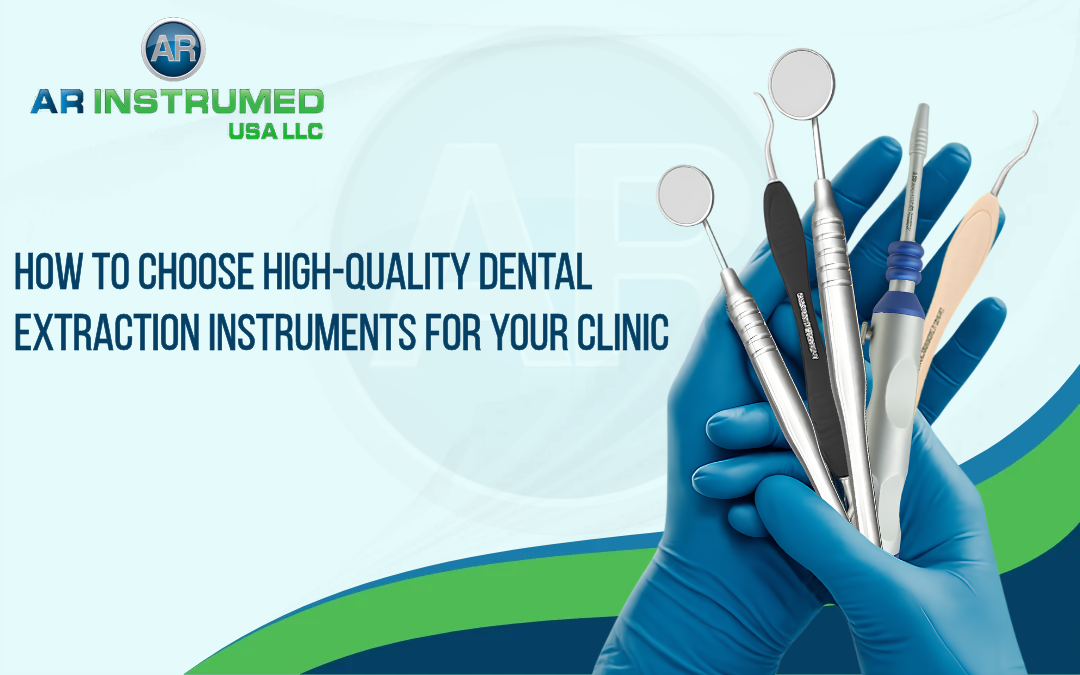
How to Choose High-Quality Dental Extraction Instruments for Your Clinic

Quick Answer: What Makes Dental Extraction Instruments High Quality?
High-quality dental extraction instruments are made from corrosion-resistant stainless steel, finished smoothly, and balanced for a secure, controlled grip. They hold up through repeated cleaning and sterilization cycles. They should also feel consistent from one piece to the next, so the forceps you reorder next year perform like the ones you bought today.
Why Instrument Quality Matters in Dental Clinics
Extraction is a force-sensitive procedure. A forceps beak that doesn’t seat properly or an elevator tip that dulls quickly makes the work harder for the clinician and less comfortable for the patient.
Quality also affects your budget. Cheap instruments that corrode, loosen at the joint, or need early replacement cost more over time than well-made professional dental extraction instruments. For clinics, that means less downtime and fewer surprises. For distributors, it means fewer returns and happier customers.
7 Important Features to Check Before Buying
Before you order, look closely at these points:
Material
Stainless steel suited to surgical use, with good corrosion resistance.
Construction
Solid joints, aligned beaks, and no visible gaps or rough seams.
Finish
A smooth, even surface that is easier to clean and less likely to trap debris.
Grip and Handle Design
Textured or well-shaped handles that stay secure with gloved hands.
Ergonomics
Balanced weight that reduces hand fatigue during longer procedures.
Sterilization Compatibility
Instruments that tolerate your clinic’s cleaning and autoclave routine.
Consistency
Reliable quality across batches, which matters most for repeat and bulk orders.
Handle material is also a practical choice. Some practitioners prefer all-metal handles, while others like silicone-handled instruments for comfort and grip. It comes down to preference and how you work.
How to Choose the Right Extraction Forceps and Elevators
The best instrument depends on the tooth, the clinical situation, and your technique. A good starting point is to match the tool to the job rather than buying a random assortment.
Extraction Forceps
Forceps are designed for specific tooth groups and arches, so beak shape and angle matter. Upper and lower forceps differ, as do designs for anterior teeth, premolars, and molars. Look for a clean, precise fit at the beaks and smooth joint action. Browse the dental extraction forceps range to compare patterns by tooth type.
Root Elevators
Elevators help loosen the tooth and work around roots before forceps are applied, or on their own in some cases. Check that the tip is well shaped, the shaft is straight and sturdy, and the handle feels controlled in your hand. A well-built set of root elevators should give you steady leverage without feeling bulky.
Periotomes
Periotomes are thin instruments used to sever the periodontal ligament, often when preserving surrounding bone matters. Because they are fine, tip quality and strength are especially important. See the periotome options if your procedures call for this kind of precision.
You can view the full selection of dental extraction instruments in one place to build your set around your actual caseload.
Stainless Steel Quality and Instrument Durability
Stainless steel is the standard material for stainless steel dental extraction instruments because it balances strength with resistance to corrosion. But “stainless” is not a guarantee of quality. How the steel is processed, finished, and treated affects how long the instrument stays sharp, tight, and rust-free.
Signs of good durability include smooth surfaces without pitting, joints that move cleanly without wobble, and tips that keep their shape. Instruments that stain easily or show early rust spots after a few sterilization cycles are a warning sign.
If you are buying in volume, ask the supplier what material the instruments are made from and what documentation they can provide. A reputable manufacturer should be able to answer these questions plainly.
Cleaning, Sterilization, and Maintenance Considerations
Even excellent instruments need proper care. Good habits protect your investment and your patients:
- Rinse or soak instruments soon after use so debris doesn’t dry on.
- Clean thoroughly, including joints, serrations, and hinges.
- Dry fully before storage to limit corrosion risk.
- Sterilize according to your clinic’s protocol and the manufacturer’s instructions.
- Inspect regularly for loose joints, bent tips, and worn surfaces, and retire damaged pieces.
Compatibility matters too. Check that the handle type, such as silicone, is suitable for your sterilization method before you order a large quantity.
How to Choose a Reliable Dental Instrument Manufacturer
For clinics and distributors, the supplier is as important as the instrument. A bad supplier experience, such as inconsistent quality, slow communication, or incomplete orders, can cost more than the price difference you saved.
Before placing an order, evaluate:
- Product range. Can they supply forceps, elevators, periotomes, and related surgical instruments from one source?
- Quality consistency. Are the pieces uniform from batch to batch?
- Communication. Do they respond clearly and promptly to product questions?
- Wholesale and bulk terms. Are pricing, minimum quantities, and lead times transparent?
- Direct sourcing. Buying dental instruments direct from the manufacturer can reduce middlemen and make it easier to discuss specifications.
If you are comparing options, request details in writing and, where possible, evaluate a sample before committing to a bulk order.
Ready to Compare Extraction Instruments?
If you’re building or refreshing your extraction set, our team can help you find the right patterns and quantities.
Browse the Extraction Range Request Product InformationWhy Consider AR Instrumed for Dental Extraction Instruments?
AR Instrumed is a dental instrument manufacturer based in Sialkot, Pakistan, supplying customers internationally. Its catalog covers more than 2,700 dental instruments, including stainless steel instruments, silicone-handled options, extraction forceps, root elevators, periotomes, and other professional dental surgical instruments.
That breadth is useful if you prefer to source multiple instrument categories from a single supplier. AR Instrumed supports individual professionals, clinics, dental dealers, and distributors, with wholesale and bulk purchasing options available.
If you are a dealer or distributor, you can start a conversation through the dealer inquiry page.
Final Buying Checklist
Before you place your order, confirm that you have:
- Matched forceps and elevators to the procedures you perform most
- Checked steel quality, finish, and joint construction
- Confirmed sterilization compatibility, including handle materials
- Asked about batch consistency and available documentation
- Compared supplier range, communication, and wholesale terms
- Requested pricing for the quantities you actually need
Get Product Details or a Bulk Quote
Whether you are equipping a new clinic, restocking an existing one, or building a dental instrument catalog for your customers, AR Instrumed can help. Contact us for product details, bulk orders, and wholesale inquiries:
Email: info@arinstrumed.com
Phone: +1 (847) 530-3761
Contact Our Team Contact UsFrequently Asked Questions
What are the most important features of high-quality dental extraction instruments?
Look for corrosion-resistant stainless steel, solid construction, a smooth finish, a secure and comfortable grip, and compatibility with your sterilization process. Consistency from piece to piece is also important.
Which material is commonly used for dental extraction instruments?
Stainless steel is the most common material because it offers a good balance of strength, durability, and corrosion resistance for surgical use.
How do I choose the right dental extraction forceps?
Match the forceps to the tooth type and arch you are treating. Check that the beaks fit securely, the joint moves smoothly, and the handle feels comfortable and controlled.
What should dental clinics look for in an instrument supplier?
Look for a broad product range, consistent quality, clear communication, transparent pricing, and reliable fulfillment. Sourcing directly from a manufacturer can also help.
Can dental extraction instruments be purchased in bulk?
Yes. Many manufacturers, including AR Instrumed, offer wholesale and bulk purchasing for clinics, dealers, and distributors. Contact the supplier to discuss quantities and pricing.
How should dental extraction instruments be maintained?
Clean them promptly after use, dry them thoroughly, sterilize according to your protocol, and inspect them regularly for wear, loose joints, or damage.
Where can dental professionals buy dental extraction instruments in the USA?
Professionals can buy from dental suppliers, distributors, or directly from manufacturers. AR Instrumed supplies extraction instruments to customers in the USA and internationally.