


Dental Instruments for Dentists: Essential Tools for Diagnosis, Extraction, Surgery & More

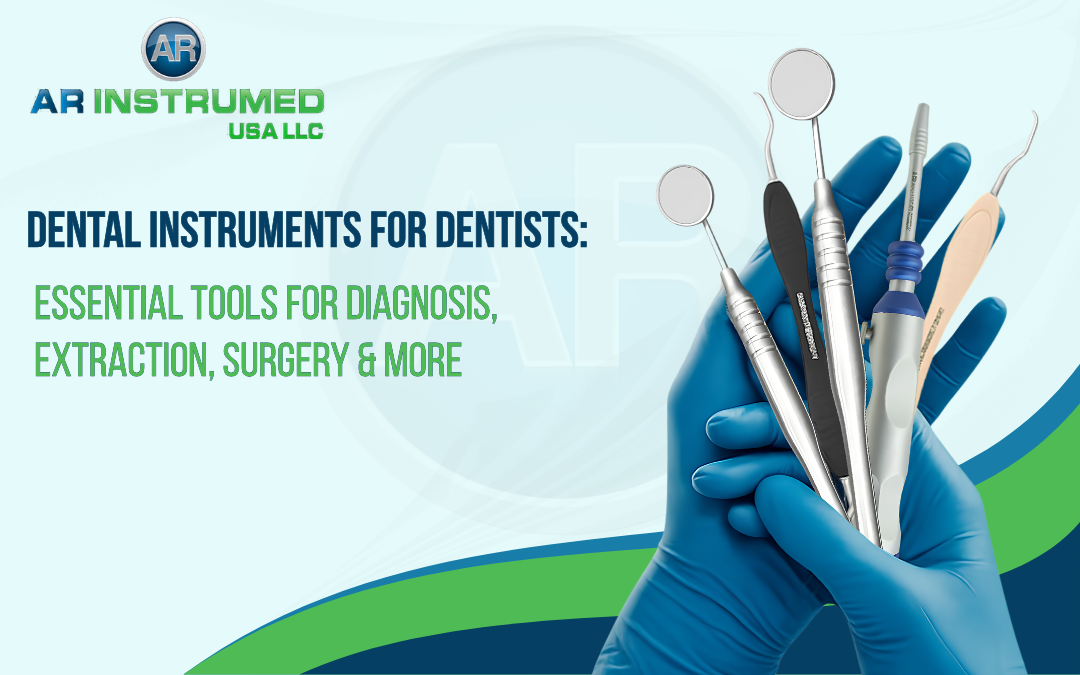
Dental instruments for dentists fall into a few core groups: diagnostic, extraction, surgical, implantology, conservative, orthodontic, prosthetic and laboratory. Which ones your practice needs depends on the procedures you perform, how you prefer to hold and handle instruments, and how they fit your sterilization workflow. This guide explains what each category does, who uses it, and how to choose with confidence.
What Are Dental Instruments, and Why Does Selection Matter?
Dental instruments are hand tools that dental professionals use to examine, manipulate tissue, remove or restore teeth, and support treatment. The right instrument improves visibility, control and efficiency. The wrong one can slow a procedure, tire the operator’s hand or wear out early.
Professional dental instruments differ in tip design, shank angle, length, material and handle style. Matching those details to the procedure matters more than buying the largest set.
Essential Dental Instrument Categories
Types of Dental Instruments for Dental Professionals
Explore dental instruments by specialty, from diagnostic and extraction instruments to surgical, implantology, orthodontic, prosthetic and laboratory tools. AR INSTRUMED helps dental professionals, clinics, hospitals, laboratories and distributors compare instrument categories for their requirements.
Diagnostic Instruments
Dental diagnostic instruments support routine examinations. Common tools include mouth mirrors, explorers, periodontal probes, tweezers and examination sets. These are essential for general practices, hygiene teams and dental students.
Browse Dental Diagnostic Instruments →Extraction Instruments and Root Elevators
Extraction forceps are designed for different tooth groups. Root elevators and luxators help loosen teeth before removal, while periotomes and bone rongeurs support selected surgical procedures. Compare instruments by design and intended use.
Explore Extraction Instruments →Surgical Instruments
Dental surgical instruments support incisions, tissue retraction, suturing and hemostasis. Common instruments include scalpel handles, tissue forceps, needle holders, hemostats, scissors, retractors and periosteal elevators.
Browse Dental Surgery Instruments →Implantology Instruments
Implantology instruments support implant placement and selected bone augmentation procedures. Options may include implant sets, bone scrapers, mallets, osteotomes, graft carriers and sinus-lift instruments.
View Dental Implantology Instruments →Conservative and Restorative Instruments
Restorative instruments are used in cavity preparation, fillings and composite placement. Examples include excavators, filling instruments, Heidemann spatulas, Lucas curettes and rubber dam accessories.
Explore Silicone Handle Instruments →Orthodontic Instruments
Orthodontic tools include wire-bending pliers, band pushers, bracket-positioning tweezers, gauges and bracket removers. Check each instrument's intended wire size and specifications before purchasing.
Shop Orthodontic Pliers →Prosthetic Instruments
Prosthetic instruments support crown and bridge procedures. This category includes crown removers, crown spreaders and crown-removal forceps for dental professionals.
Browse Crown Removal Instruments →Dental Laboratory Instruments
Laboratory instruments are designed for bench work in dental laboratories and in-house technical departments. Common tools include carving instruments, spatulas, laboratory knives and amalgam carriers.
View Dental Laboratory Instruments →Silicone Handle Dental Instruments
Silicone handle instruments combine a steel working end with a grip designed for handling comfort. Color options may help organize instrument trays. AR INSTRUMED states that its AR Premium, AR Light and AR Soft handles are autoclavable at 134°C. Confirm the instructions for use for each specific product.
Explore Silicone Handle Dental Instruments →Looking for a Dental Instrument Supplier?
Explore dental instruments for clinics, hospitals, dental schools, laboratories and distribution businesses. Review product specifications and contact our team for product information and purchasing enquiries.
Contact AR INSTRUMED →Checklist: How to Select Dental Instruments
- Intended use: Match the instrument to the specific procedure and tooth area.
- Design: Check tip size, shank angle, working-end shape and overall length.
- Material and finish: Look for corrosion-resistant steel and a finish suited to repeated reprocessing.
- Handling: Compare handle diameter, weight and grip, especially for long procedures.
- Maintenance: Ask how the instrument should be cleaned, inspected and, where relevant, sharpened.
- Sterilization compatibility: Confirm the autoclave temperature and cycle the manufacturer allows.
- Manufacturer instructions: Read the instructions for use, and follow your local infection-control requirements.
For Dental Clinics and Individual Practitioners
Start with the instruments you use every day, such as examination sets, extraction forceps and conservative instruments, then add specialty sets as your services grow. Standardizing handle styles across a tray can also make reprocessing and replacement simpler.
Ready to equip your practice? Browse dental instruments by category in the AR INSTRUMED online shop → Find instruments for your practice.
For Dealers, Distributors, Hospitals and Dental Schools
Institutional buyers usually need range, consistency and clear documentation. AR INSTRUMED’s catalog spans silicone handle, diagnostic, extraction, surgical, implantology, prosthetic, orthodontic and laboratory instruments. Its website states ISO 9001 and ISO 13485 certification, CE marking and FDA registration, and mentions the possibility of custom instrument designs or modifications. Request the relevant certificates and specifications for your market, and discuss your requirements directly. Hospitals and universities can ask about specifications, product ranges and ordering requirements the same way.
Buying for Resale or an Institution?
Dental dealers, distributors, importers, hospitals and educational institutions can contact AR INSTRUMED to discuss their dental instrument requirements.
Submit a Dealer Inquiry →
Prefer to contact us directly?
Email:
info@arinstrumed.com
Phone:
+1 (847) 530-3761
Frequently Asked Questions
What dental instruments does a dentist need?
Most general practices need diagnostic, extraction, conservative and basic surgical instruments. Implantology, orthodontic, prosthetic and laboratory instruments are added based on the services offered.
What is the difference between extraction and surgical instruments?
Extraction instruments, such as forceps and elevators, are designed to loosen and remove teeth. Surgical instruments handle tissue: incising, retracting, grasping and suturing.
Are silicone handle dental instruments autoclavable?
Many are, but it depends on the product. Check the manufacturer’s instructions for use for the temperature and cycle limits.
Can I buy dental instruments online?
Yes. Individual dentists and clinics can order from online shops such as AR INSTRUMED’s. Check each product’s description and the shop’s terms before ordering.
How do dental instrument suppliers support dealers and distributors?
Dealers usually start with an inquiry covering product range, specifications and ordering requirements. AR INSTRUMED provides a dealer inquiry form for this.