


Dental Implant Instruments: Complete Guide to Essential Implantology Instruments & Surgical Tools

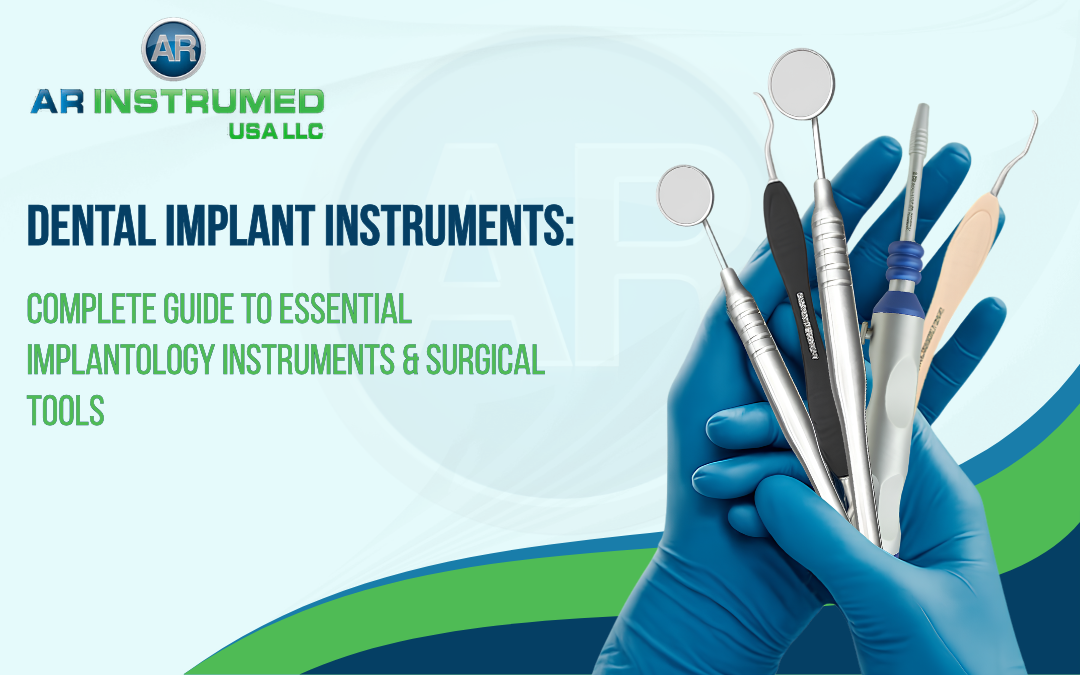
Dental implant procedures depend on more than clinical skill they depend on having the right instruments in hand at the right moment. Whether you’re placing a single implant or managing a full-arch case, the quality and organization of your dental implant instruments directly affect precision, procedure flow, and patient outcomes. This guide walks through the essential implantology instruments used in modern implant dentistry, what to consider when purchasing them, and how to evaluate a dental implant instruments supplier in the USA. Professional-grade tools from a dependable manufacturer, such as AR Instrumed USA, can make case preparation smoother and more predictable for dental teams nationwide.
Dental implant instruments are the specialized surgical tools used to prepare the implant site, manage soft and hard tissue, and support the placement of dental implants. This category includes instruments such as osteotomes, periosteal elevators, bone scrapers, sinus lift instruments, and bone grafting tools. Each instrument is designed for a specific stage of the implant procedure, from tissue reflection to bone preparation and graft material handling. Together, they form the surgical toolkit that implantologists, oral surgeons, and periodontists rely on for accurate, organized implant placement.
Essential Dental Implant Surgery Instruments
Implant surgery instruments generally fall into a handful of functional categories. Understanding what each one does helps clinics and buyers select instruments that match their procedural needs.
Osteotomes
Osteotomes are used to prepare and expand the implant osteotomy site, particularly in cases where bone density requires condensation rather than drilling. They allow controlled shaping of the bone socket and are commonly used alongside dental mallets during ridge expansion or sinus lift procedures.
Periosteal Elevators
Periosteal elevators are used for soft-tissue reflection, separating the periosteum from the underlying bone to expose the surgical site. Precise, well-balanced elevators reduce tissue trauma and give the surgeon a clearer working field before implant placement begins.
Bone Scrapers and Bone Chisels
Bone scrapers collect autogenous bone particles for grafting, while bone chisels assist in shaping or removing bone during site preparation. These dental surgical instruments are especially relevant in cases involving ridge augmentation or localized bone grafting.
Sinus Lift Instruments
Sinus lift instruments are designed for sinus augmentation procedures, where the sinus membrane must be carefully elevated to create space for grafting material. This instrument category typically includes curved and offset elevators built for delicate membrane management.
Implant Instrument Sets
A complete implant instrument set brings together the core tools needed for a procedure — elevators, osteotomes, scrapers, and related instruments — in one organized case. This keeps surgical trays consistent, reduces setup time, and helps ensure nothing is missing before a case begins.
Dental Hammers and Mallets
Dental hammers and mallets are used with osteotomes and chisels to apply controlled force during bone preparation. Weight balance and grip design matter here, since consistent, predictable force reduces the risk of uneven bone shaping.
Membrane Instruments
Membrane instruments are used to position and adapt barrier membranes during guided bone regeneration (GBR) procedures. Fine, precise tips are important for handling membranes without tearing or displacing them.
Bone Grafting Instruments
Bone grafting instruments cover a range of tools used to collect, transport, and pack grafting material into the surgical site. This includes carriers, condensers, and application tools designed for accurate, minimally traumatic placement of graft material.
Looking for professional dental implant instruments for your practice or dental supply business? Explore AR Instrumed’s implantology instrument collection or contact our team for product information and purchasing assistance.
How to Choose the Right Dental Implant Instruments
Selecting the right dental implant surgical instruments comes down to a few practical factors:
- Material quality — instruments should be made from high-grade stainless steel that resists corrosion and holds an edge over repeated use
- Precision manufacturing — tight tolerances affect how instruments perform during delicate procedural steps
- Ergonomics — handle design and weight distribution influence control during longer procedures
- Durability — instruments should withstand repeated sterilization cycles without degrading
- Sterilization compatibility — instruments need to be autoclave-safe and easy to clean
- Instrument finish — a smooth, consistent finish supports both function and hygiene
- Procedure requirements — some cases call for specialized instruments, others for general-purpose sets
- Complete sets vs. individual instruments — buyers should match their purchase to how their practice actually works
- Manufacturer or supplier reliability — consistent quality across orders matters as much as the instrument itself
Practices that weigh these factors carefully tend to build more efficient, better-organized surgical trays over time.
Stainless Steel Dental Implant Instruments: Why Material Matters
Stainless steel is widely used in dental implant instrument manufacturing because of its corrosion resistance, strength, and ability to withstand repeated sterilization. High-quality stainless steel instruments maintain their precision and finish over time, which matters for instruments that are cleaned, autoclaved, and reused across many procedures. For dental practices and distributors, material quality is one of the clearest indicators of an instrument’s long-term value and performance.
Dental Implant Instrument Sets vs Individual Instruments
Some buyers prefer complete implantology sets, while others purchase individual instruments to fill specific gaps in their inventory. Both approaches have a place depending on how a practice operates.
| Factor | Individual Dental Implant Instruments | Complete Implant Instrument Sets |
|---|---|---|
| Best for | Replacing, upgrading, or adding specific instruments | Equipping a new operatory or standardizing implant procedure trays |
| Setup time | Requires selecting and organizing individual instruments | Pre-organized for convenient tray preparation and sterilization |
| Cost approach | Pay only for the instruments you currently need | Can be more efficient when purchasing instruments for complete procedures |
| Instrument consistency | Quality and design may vary between purchases | Provides a consistent range of instruments within the set |
| Customization | Easy to select instruments based on specific requirements | Set configuration may be less flexible unless customization is available |
| Ideal buyer | Practices expanding or replacing selected instruments | New practices, clinics, or buyers looking for a complete solution |
| Buying intent | Best for targeted replacements or specific needs | Best for comprehensive implantology instrument requirements |
Clinics building out a new implant workflow often start with a set, while established practices may purchase individual instruments to supplement existing trays.
How to Choose a Dental Implant Instruments Supplier in the USA
Choosing the right dental implant instruments supplier in the USA is just as important as choosing the instruments themselves. Dental clinics, distributors, and purchasing managers should evaluate potential suppliers on:
- Product range — a broad implantology and surgical instrument catalog reduces the need to source from multiple vendors
- Manufacturing quality — consistent tolerances and finish across production runs
- Material quality — verified stainless steel grades suited for surgical use
- Product specifications — clear, accurate documentation for each instrument
- Order consistency — instruments that match specification order after order
- Customization capability — the ability to modify or design instruments for specific procedural needs
- Customer support — responsive communication for product questions and order support
- Bulk ordering capability — practical for clinics, labs, and distributors purchasing at volume
- Professional manufacturing standards — a manufacturing process built around dental industry requirements
AR Instrumed USA LLC works with dental practices, distributors, and buyers across the country as a manufacturer and supplier of implantology and dental surgical instruments, offering a catalog built around these considerations.
Why Choose AR Instrumed USA?
AR Instrumed USA brings together dental instrument manufacturing experience with a focus on implantology and surgical instruments made from quality stainless steel. Key strengths include:
- A wide product range covering implantology instruments, sets, and individual surgical tools
- CNC manufacturing capability that supports precision and consistency across production
- Custom instrument design and modification capability for practices with specific procedural needs
- Support for dental clinics, laboratories, and distributors placing bulk or recurring orders
- A catalog built specifically around the needs of dental professionals across the USA
For dental buyers who need a manufacturing partner they can order from consistently, AR Instrumed offers a straightforward, professional option for sourcing implantology and surgical instruments.
Frequently Asked Questions
What instruments are used for dental implant surgery?
Common dental implant surgery instruments include osteotomes, periosteal elevators, bone scrapers, sinus lift instruments, bone grafting tools, and complete implant instrument sets, each supporting a specific stage of the procedure.
What are the most important implantology instruments?
The most essential implantology instruments include osteotomes for site preparation, periosteal elevators for soft-tissue management, and sinus lift instruments for augmentation procedures, along with grafting and membrane instruments as needed.
What should I look for when buying dental implant instruments?
Buyers should prioritize stainless steel material quality, precision manufacturing, ergonomic design, sterilization compatibility, and whether a complete set or individual instruments better match their procedural needs.
Where can I buy dental implant instruments in the USA?
Dental professionals can source dental implant instruments through specialized manufacturers and suppliers such as AR Instrumed USA, which serves dental clinics, distributors, and buyers nationwide.
What is included in a dental implant instrument set?
A typical implant instrument set includes core tools such as elevators, osteotomes, bone scrapers, and related instruments organized together for efficient, standardized procedural use.
Are stainless steel instruments suitable for implantology?
Yes. High-grade stainless steel is widely used in implantology instruments because of its corrosion resistance, durability, and ability to withstand repeated sterilization cycles.
How do I choose a dental implant instrument supplier?
Evaluate suppliers based on product range, manufacturing quality, material standards, customization capability, bulk ordering support, and responsive customer communication.
Ready to Source Dental Implant Instruments?
Explore AR Instrumed's implantology instruments, surgical tools, and instrument sets for dental professionals and buyers across the USA. Contact our team to discuss your instrument requirements, product options, or bulk orders.