

Best Dental Extraction Instruments for Dentists in USA: Complete Buyer’s Guide (2026)

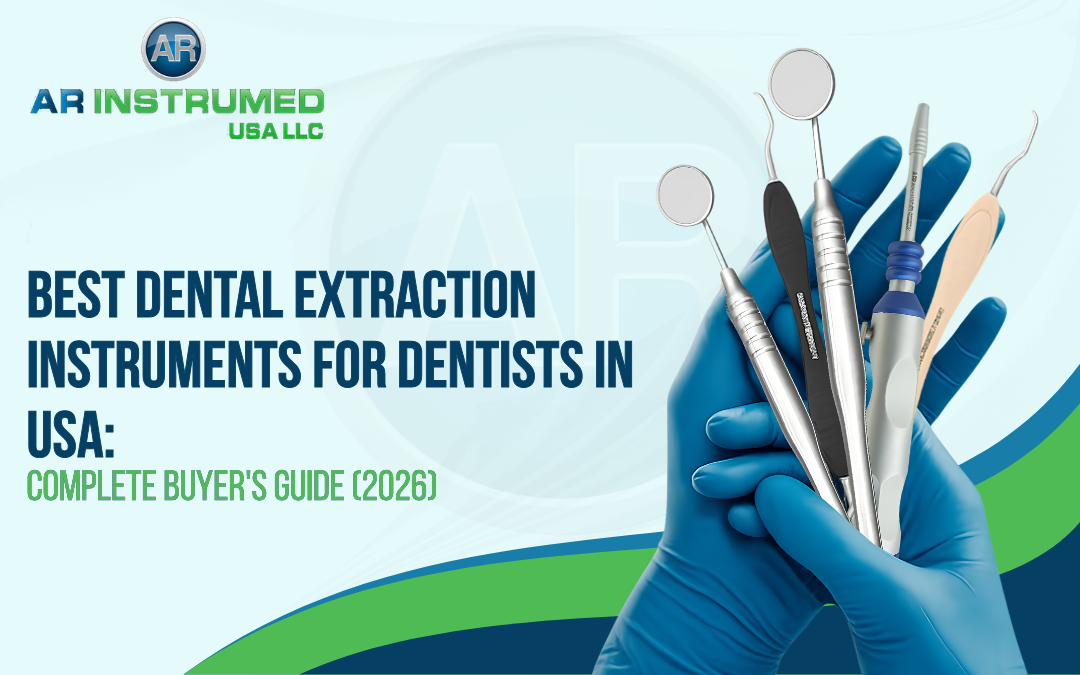
Choosing the right dental extraction instruments affects patient safety, procedure time, and long-term cost per use. This guide breaks down what US dentists, oral surgeons, and procurement teams need to know before they buy and where to source CE and ISO 13485 certified instruments at factory-direct pricing.
If you're comparing suppliers today, you can request a free quote or download our product catalog while you read. Visit AR Instrumed USA.
Extraction instruments take direct mechanical load during a procedure. Weak steel, poor tip geometry, or inconsistent hinge tolerance can mean slower extractions, higher risk of fragment retention, and instruments that fail sterilization cycles early.
For a clinic doing dozens of extractions a week, instrument quality shows up in three places:
- Chair time sharper, better-balanced forceps reduce procedure time.
- Instrument lifespan premium stainless steel resists corrosion through hundreds of autoclave cycles.
- Patient outcomes precise jaw alignment on forceps reduces trauma to surrounding bone and tissue.
This is why hospitals and dental groups increasingly buy direct from manufacturers rather than generic distributors the specification consistency matters at volume.
Essential Extraction Instruments Every Dentist Needs
A complete extraction kit typically includes:
- Extraction forceps upper and lower sets, tooth-specific (molars, premolars, incisors, roots)
- Elevators straight, Cryer, and Winter elevators for luxating teeth before removal
- Root tip picks for retrieving fractured root fragments
- Periosteal elevators for reflecting the gum tissue
- Bone files and rongeurs for smoothing the socket after extraction
- Needle holders and suture scissors for post-extraction closure
Clinics ordering in bulk often standardize on one manufacturer across all of these to keep tolerances and finishing consistent tray to tray something worth asking a supplier about directly if you’re evaluating a switch.
Extraction Instrument Comparison Table
| Instrument | Primary Use | Common Material | Typical Sterilization Cycles |
|---|---|---|---|
| Extraction Forceps | Gripping and removing the tooth | German/Premium Stainless Steel | 1,000+ |
| Elevators | Loosening tooth before extraction | Stainless Steel | 800–1,000+ |
| Root Tip Picks | Removing fractured root fragments | Stainless Steel | 800+ |
| Periosteal Elevators | Reflecting gum tissue | Stainless Steel | 1,000+ |
| Bone Rongeurs | Trimming bone edges | Surgical-Grade Steel | 700–900 |
Note: Cycle counts vary by steel grade, finishing, and autoclave settings — ask your supplier for tested figures.
How to Choose the Right Extraction Instruments
Buyers should evaluate instruments on five criteria, in this order:
- Steel grade and hardness determines edge retention and corrosion resistance.
- Certification CE marking and ISO 13485 confirm the manufacturer follows a documented quality management system.
- Finish mirror, satin, or matte finish affects glare under surgical lighting and ease of cleaning.
- Ergonomics handle shape and weight distribution reduce hand fatigue over a full clinic day.
- Supplier reliability consistent lead times matter more than a slightly lower unit price if it means stockouts.
Procurement managers evaluating multiple SKUs at once should request a product catalog to compare full specifications side by side rather than relying on marketplace listings alone.
Features of Premium Stainless Steel Instruments
Not all “stainless steel” instruments are equal. Premium surgical-grade instruments typically offer:
- Corrosion resistance across repeated autoclave sterilization
- Precision manufacturing with tight tolerances at the hinge and jaw
- Consistent hardness (measured on the Rockwell scale) for edge retention
- Sterilization compatibility with steam autoclaves and chemical disinfection
- Long-lasting performance properly maintained instruments can serve a clinic for years, not months
These aren’t marketing terms in isolation they’re the same specifications procurement teams should ask any manufacturer to document with test data, not just claim.
Why Clinics Prefer Reliable Manufacturers
Dental groups, hospitals, and multi-location clinics increasingly consolidate purchasing with a single manufacturer rather than mixed distributor sourcing. The reasons are practical:
- Consistent quality control across every batch, reducing tray-to-tray variance
- Traceability CE and ISO 13485 documentation supports compliance audits
- Direct communication for custom specifications or OEM/private label needs
- Better pricing at volume, since there’s no distributor markup layered in
If your clinic or group is evaluating a supplier switch, our team can walk through your current specifications and match or improve on them. Contact our sales team to start that conversation.
Wholesale & Bulk Buying Guide
Dealers, distributors, importers, and multi-clinic buyers purchasing in volume should look for:
- Factory direct pricing with transparent bulk order discount tiers
- OEM and private label dental instruments options for branded resale
- Fast worldwide shipping with realistic lead times, not just promised ones
- Flexible MOQs for new distributors testing a product line
- CE certified dental instruments and ISO 13485 documentation included with every shipment
Wholesale buyers can request wholesale pricing directly, or become a distributor to access tiered volume discounts and marketing support.
Why Choose Our Company
We manufacture CE certified, ISO 13485 compliant dental extraction instruments in premium stainless steel, built for US dental clinics, hospitals, and distributors that need consistency at scale. Our process centers on:
- Precision manufacturing with documented quality control at every batch
- OEM and private label programs for dealers and distributors
- Factory direct pricing with real bulk order discounts
- A responsive sales team that can turn around custom quotes quickly
Whether you're a solo practice restocking a kit or a distributor placing a container order, we can match instruments to your specification. Request a quote to see current pricing.
Conclusion
Choosing the right dental extraction instruments comes down to steel quality, certification, and a supplier you can rely on for consistent batches whether you’re ordering one kit or a container load. If you’re ready to compare pricing or specifications, request a free quote, download our product catalog, or contact our sales team for wholesale pricing today.
Frequently Asked Questions
What are the most commonly used dental extraction instruments?
The core set includes extraction forceps, elevators, root tip picks, periosteal elevators, and bone rongeurs together covering most routine and surgical extractions.
What steel is best for dental extraction instruments?
Premium surgical-grade stainless steel is the standard, valued for corrosion resistance, edge retention, and compatibility with repeated autoclave sterilization.
How do I know if extraction instruments are CE and ISO 13485 certified?
Ask the manufacturer for certification documentation directly reputable suppliers provide CE and ISO 13485 certificates on request, not just a logo on the website.
Can I order dental extraction instruments wholesale in the USA?
Yes. Most manufacturers offer wholesale and bulk order discounts for clinics, dealers, distributors, and importers, often with OEM or private label options available.
How often should extraction instruments be replaced?
Well-maintained premium stainless steel instruments can last years and hundreds of sterilization cycles; replacement is usually driven by visible wear, dulling, or hinge looseness rather than a fixed timeline.