


Best Composite Placement Instruments for Dentists: Buyer’s Guide (2026)

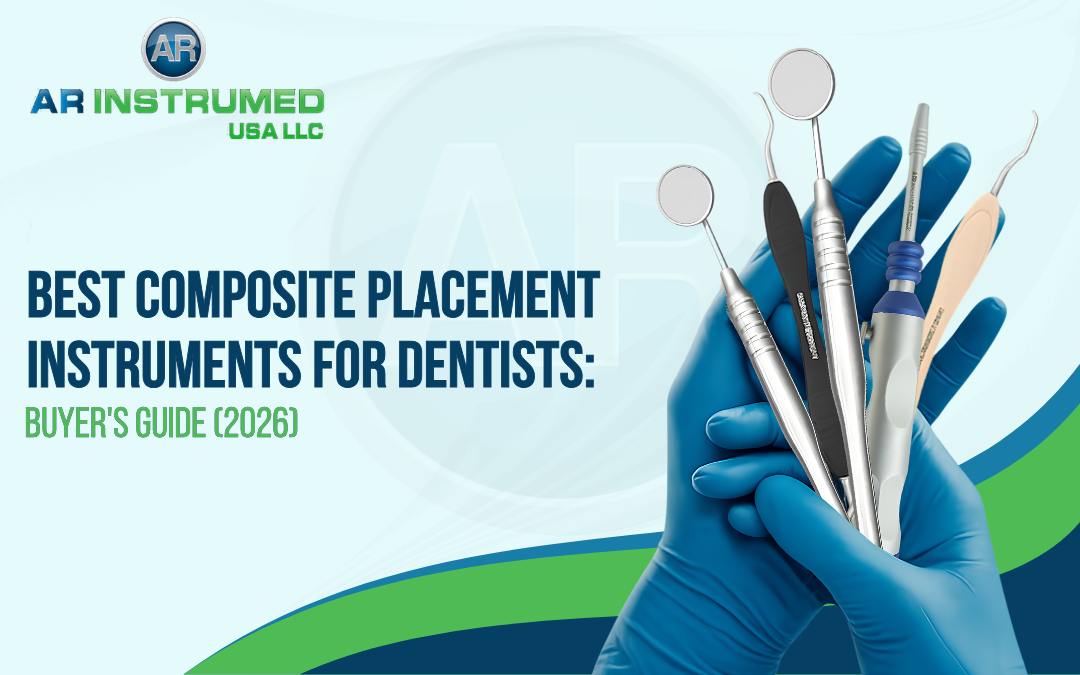
Quick Answer: The best composite placement instruments are non-stick, titanium-coated or Teflon-coated, stainless steel hand instruments with ergonomic handles that allow precise sculpting, contouring, and adaptation of composite resin without material drag. For most general and cosmetic dentistry practices, a full composite instrument set including a condenser, placement instrument, and contouring/carving instrument offers the best balance of clinical performance, durability, and value. AR Instrumed's composite instrument kits are engineered for exactly this purpose, combining German-grade stainless steel with anti-stick coatings trusted by dental professionals across the USA.
If you're a dentist, clinic owner, dental school, hospital, or distributor searching for dental composite instruments that deliver consistent restorations and long-term durability, this guide breaks down everything you need to know before you buy.
Composite resin restorations are only as good as the instruments used to place them. Poor-quality or worn-out composite filling instruments can cause:
- Material sticking and pulling, leading to voids and porosity
- Inaccurate anatomical contouring
- Increased chair time and patient discomfort
- Inconsistent restoration quality across your team
In restorative dentistry and cosmetic dentistry, precision placement directly affects the final aesthetic outcome, marginal integrity, and longevity of the restoration. Investing in high-quality, non-stick composite resin placement instruments isn’t a luxury it’s a clinical necessity that protects your reputation, reduces remakes, and improves patient satisfaction.
Types of Composite Placement Instruments
Understanding the different instrument types helps you build the right kit for your practice.
1. Composite Placement & Condensing Instruments
Used to carry and pack composite resin into the cavity preparation with minimal air entrapment.
2. Composite Sculpting & Carving Instruments
Designed for anatomical composite sculpting and composite contouring, replicating natural tooth morphology before curing.
3. Non-Stick / Silicone Composite Instruments
Silicone composite instruments and non-stick tips prevent resin from adhering to the working end, ensuring smoother application and cleaner margins.
4. Titanium-Coated Composite Instruments
Titanium coated composite instruments offer superior corrosion resistance, reduced sticking, and longer instrument life compared to standard stainless steel.
5. Double-Ended Composite Instruments
Combine two functions (placement + carving) in one instrument for efficiency and reduced tray clutter ideal for high-volume clinics.
How to Choose the Best Composite Placement Instrument
Selecting the right composite placement instruments for dentists depends on your clinical workflow, case volume, and material preferences. Consider:
- Procedure type anterior aesthetic cases need finer sculpting tips; posterior restorations need stronger condensing ends
- Coating non-stick or Teflon coatings reduce resin adherence significantly
- Material premium stainless steel instruments resist corrosion and maintain a sharp edge longer
- Handle design an ergonomic handle reduces hand fatigue during long procedures
- Sterilization compatibility always confirm the instrument is fully autoclavable
- Brand reliability choose a manufacturer with proven clinical performance and USA-based support
Top Features to Look For
When comparing dental composite instrument kits, prioritize these features:
- ✅ Non-stick or titanium-coated working tips
- ✅ High-grade surgical stainless steel construction
- ✅ Balanced, lightweight, ergonomic handle
- ✅ Precision-milled tips for precision placement
- ✅ Corrosion and rust resistance after repeated autoclaving
- ✅ Consistent tip calibration across sets
- ✅ Lifetime-grade durability backed by warranty
Common Buying Mistakes
Avoid these mistakes when purchasing dental composite instruments:
- Buying based on price alone cheap instruments often lose their non-stick coating after a few sterilization cycles.
- Ignoring tip variety a single-tip instrument limits your ability to handle anterior and posterior cases.
- Skipping ergonomic testing poor handle design increases hand fatigue over time.
- Overlooking supplier credibility always buy from a verified dental instruments manufacturer USA or authorized supplier.
- Not checking autoclave compatibility some coated instruments degrade faster under improper sterilization.
Why Buy from AR Instrumed USA
AR Instrumed is a trusted dental instruments supplier USA dentists, clinics, hospitals, universities, and distributors rely on for premium-grade instrumentation.
Here’s what sets us apart:
- Premium Quality Dental Instruments every composite instrument is crafted for consistent, reliable clinical performance
- Precision Manufacturing tips are milled to exact specifications for accurate composite placement and contouring
- Durable Stainless Steel Construction built to withstand repeated autoclave cycles without corrosion
- Ergonomic Design balanced handles reduce hand fatigue during long restorative procedures
- Trusted by Dental Professionals used by practicing dentists, dental schools, and clinics across the United States
- Competitive Pricing professional-grade instruments without inflated markups
- Excellent Customer Support responsive service for individual orders, bulk orders, and wholesale accounts
Whether you need a single professional composite instrument or you're a distributor sourcing dental instruments wholesale USA, AR Instrumed delivers consistent quality at scale.
👉 Explore our full Composite Placement Instruments collection and see why dental professionals nationwide choose AR Instrumed.Comparison Table: Choosing the Right Composite Instrument
| Feature | Standard Stainless Steel | Non-Stick / Silicone Tip | Titanium-Coated (AR Instrumed) |
|---|---|---|---|
| Resin Sticking | Moderate to High | Low | Very Low |
| Durability | Good | Moderate | Excellent |
| Corrosion Resistance | Moderate | Moderate | High |
| Best For | General restorations | Anterior aesthetics | High-volume clinical use |
| Autoclavable | Yes | Yes (check coating) | Yes |
| Long-Term Value | Good | Good | Best |
Buying Checklist
Before you buy composite placement instruments, confirm:
- Instrument is made from surgical-grade stainless steel
- Tips are non-stick or titanium-coated
- Handle is ergonomic and balanced
- Instrument is fully autoclavable
- Supplier offers warranty or replacement policy
- Supplier supports bulk and wholesale ordering
- Reviews or clinical reputation confirm reliability
Conclusion
Choosing the best composite placement instruments comes down to material quality, coating technology, ergonomic design, and a supplier you can trust. A well-built composite instrument set improves clinical efficiency, restoration quality, and patient outcomes while reducing long-term replacement costs.
If you’re ready to upgrade your restorative kit, buy dental instruments online from a manufacturer built on precision and reliability.
Explore AR Instrumed's Composite Placement Instruments collection today, or contact our team for bulk orders and wholesale pricing tailored to clinics, hospitals, universities, and distributors across the USA.
📞 Visit AR Instrumed to browse our full catalog and place your order.Frequently Asked Questions
1. What are composite placement instruments used for?
Composite placement instruments are dental hand tools used to carry, pack, sculpt, and contour composite resin during restorative and cosmetic dental procedures, ensuring accurate anatomical shape and minimal voids.
2. What is the best material for composite placement instruments?
Surgical-grade stainless steel with a non-stick or titanium coating is considered best, as it resists composite adherence, withstands repeated autoclave sterilization, and maintains precision over time.
3. Where can I buy composite placement instruments online in the USA?
You can buy premium composite placement instruments online from AR Instrumed, a trusted dental instruments supplier and manufacturer serving dentists, clinics, hospitals, and distributors across the USA.
4. Are titanium-coated composite instruments worth the investment?
Yes. Titanium-coated composite instruments reduce resin sticking, resist corrosion, and last significantly longer than standard uncoated stainless steel instruments, offering better long-term value.
5. Does AR Instrumed offer wholesale pricing for dental clinics and distributors?
Yes. AR Instrumed offers competitive wholesale and bulk order pricing for dental clinics, hospitals, universities, and distributors. Contact AR Instrumed directly through arinstrumed.com for custom pricing.